How AI Food Scanners Work
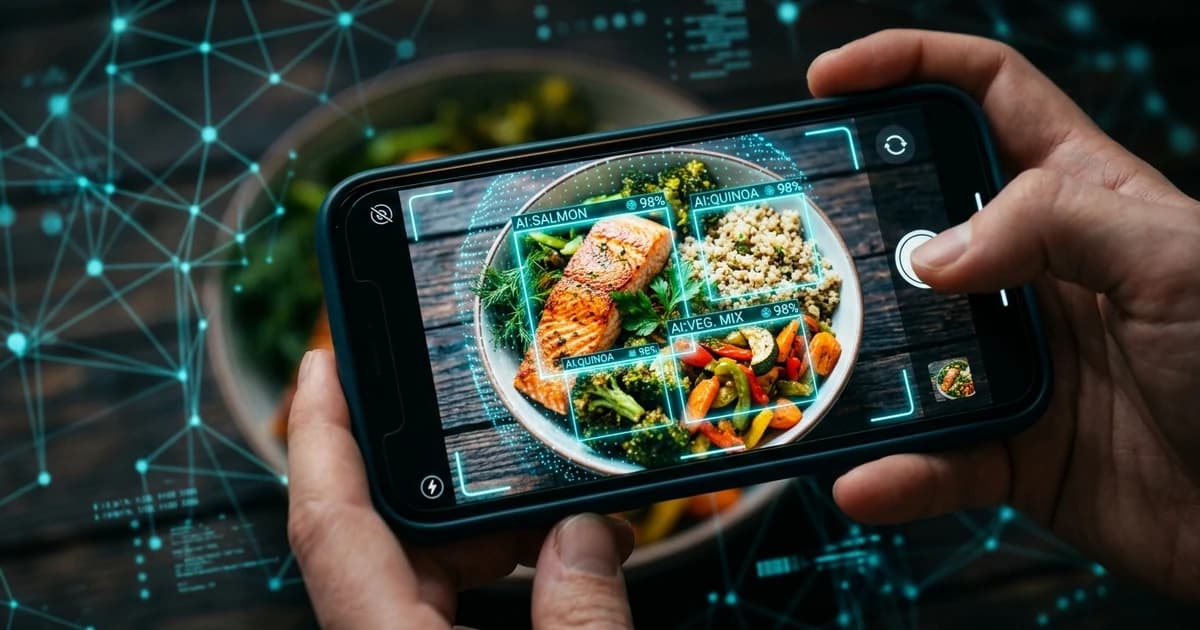
An AI food scanneruses computer vision to identify what's on your plate, estimate portion size from the image, and match items to a nutrition database — turning a photo into estimated calories, protein, carbs, and fat in a few seconds.
Reviewed by the Fitnivo Editorial Team. General information, not medical advice.
The four steps
- Image capture. You take a photo of your meal (single dish, whole plate, or packaged product). Better lighting and a top-down angle usually improve recognition.
- Food recognition (computer vision).A trained vision model segments the image, identifies each item ("rice", "grilled chicken", "broccoli"), and outputs class labels with confidence scores.
- Portion estimation. The model estimates the volume or weight of each identified item using visual references (plate size, item shape, depth cues from the phone camera).
- Nutrition lookup. Each identified food and its estimated portion is matched against a nutrition database (USDA, curated app database, or a commercial provider) to calculate calories, protein, carbs, and fat.
What affects accuracy
- Photo quality: Blurry, dim, or angled photos reduce recognition accuracy.
- Mixed dishes: Casseroles, curries, and layered dishes are harder because ingredients aren't individually visible.
- Hidden fats and sauces: A photo can't see oil in the pan or dressing under lettuce — these are commonly under-counted.
- Regional foods: If a specific regional dish wasn't in the training data, the model may match to a similar-looking food that has different macros.
- Portion depth: Cameras estimate depth better on newer phones with depth sensors, which improves volume estimation.
How to get better results
- Take the photo from directly above the plate
- Include a familiar object for scale (a standard fork, a standard plate)
- Photograph before you eat, not halfway through
- Adjust the AI's estimate before saving if you know it's off (e.g., extra oil, larger serving)
- Use search or barcode entry for packaged food — usually more precise than photo
What AI food scanners are good for
- Fast daily logging when you don't want to search a database
- Restaurant meals where you don't know the exact recipe
- Home-cooked mixed meals where entering each ingredient would take too long
- Reducing the friction that makes people quit calorie tracking in the first week
What they're not good for
- Bodybuilders in a strict prep who need precise macros — weigh food instead
- Clinical macronutrient calculations for medical conditions — work with a professional
- Packaged food where the label is right there — use the barcode
How Fitnivo does it
Fitnivo's AI food scanneris built into the same app as your AI nutrition coach and workouts, so a scanned meal automatically counts toward your day's targets and shows up in your coach's recommendations tomorrow. On the free tier you get 3 scans per day (enough for most daily users); Pro is $10/month or $60/year for unlimited scans.
FAQ
How do AI food scanners work?
An AI food scanner uses computer vision to identify foods in a photo, estimate portion size from visual cues, and match items to a nutrition database to calculate calories, protein, carbs, and fat.
Are AI food scanners accurate?
AI food scanners are estimates, not lab measurements. Accuracy is highest for single, clearly-visible foods and lower for mixed dishes with hidden ingredients. Good apps let you adjust the estimate before saving.
Can AI food scanners recognize any cuisine?
Modern models are trained on wide global datasets covering common cuisines. Very regional or unusual dishes may not match perfectly; search or manual entry is a fallback.
Do AI food scanners work offline?
Most AI food scanners process images in the cloud, so an internet connection is required for instant estimates.
Try Fitnivo's AI food scanner
3 free scans/day forever. Pro unlocks unlimited for $10/mo or $60/yr.
Download Fitnivo