

What Are Macronutrients?
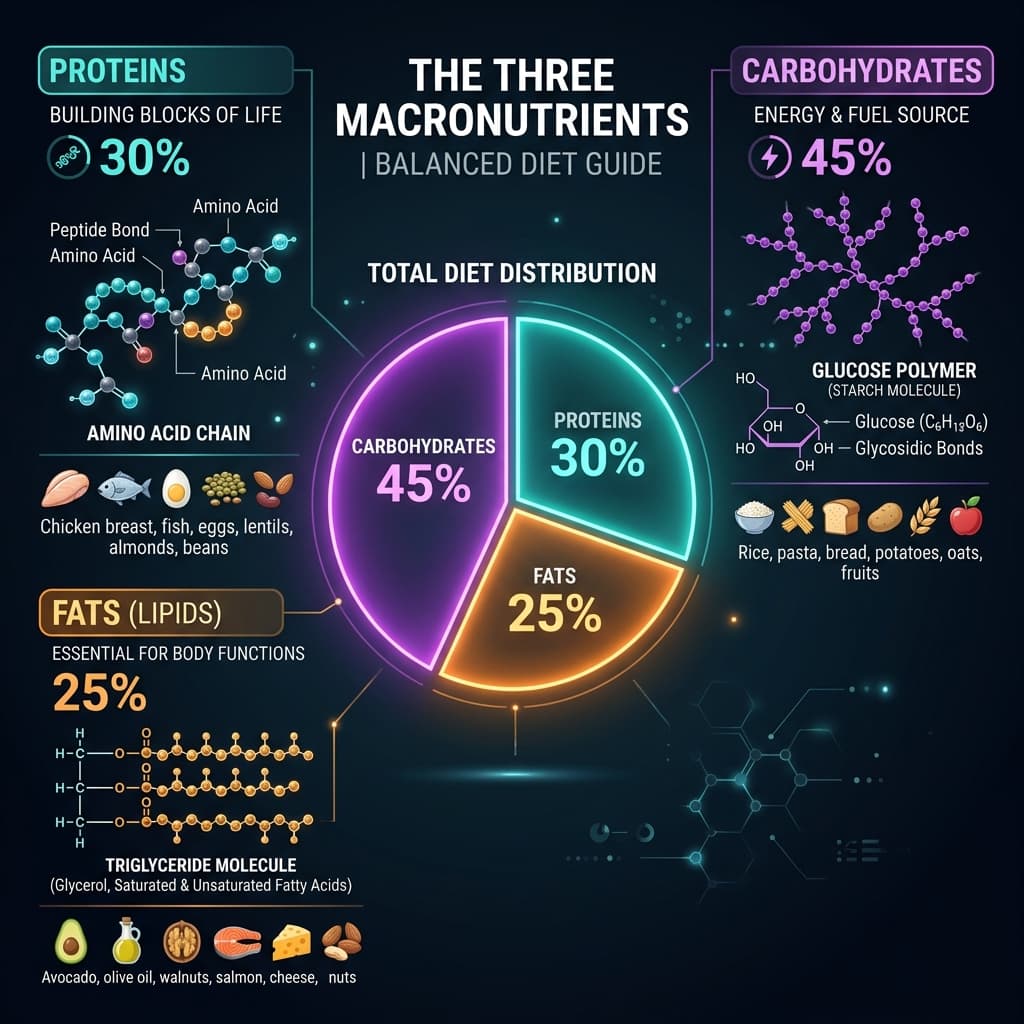
Macronutrients — protein, carbohydrates, and fats — are the three calorie-bearing nutrients your body uses for energy, structural repair, and hormonal synthesis. While every diet debate seems to pit these macros against each other, the research consistently shows a more nuanced picture: total intake matters far less than macro quality and individual metabolic context.
Research on individual metabolic response (see the PREDICT study, Nature Medicine 2020) shows that body composition changes often stall not from eating too many calories, but from miscalibrated macro ratios relative to each person's training volume, stress, and hormonal baseline — factors that change week to week.
What Is a Macronutrient?
A macronutrient is any nutrient required in large quantities for energy production and bodily function. The three macronutrients are protein (4 kcal/g), carbohydrates (4 kcal/g), and fats (9 kcal/g). Each plays a distinct physiological role beyond mere calorie supply.
Protein: The Building Block
Protein is not just for bodybuilders. Every cell in your body contains protein. Your enzymes, immune cells, neurotransmitters, and structural tissues all depend on a continuous supply of amino acids. The average sedentary adult needs ~0.8g/kg of bodyweight, but active individuals and those in a caloric deficit need 1.6–2.4g/kg to preserve lean mass and accelerate recovery.
Complete vs. Incomplete Proteins
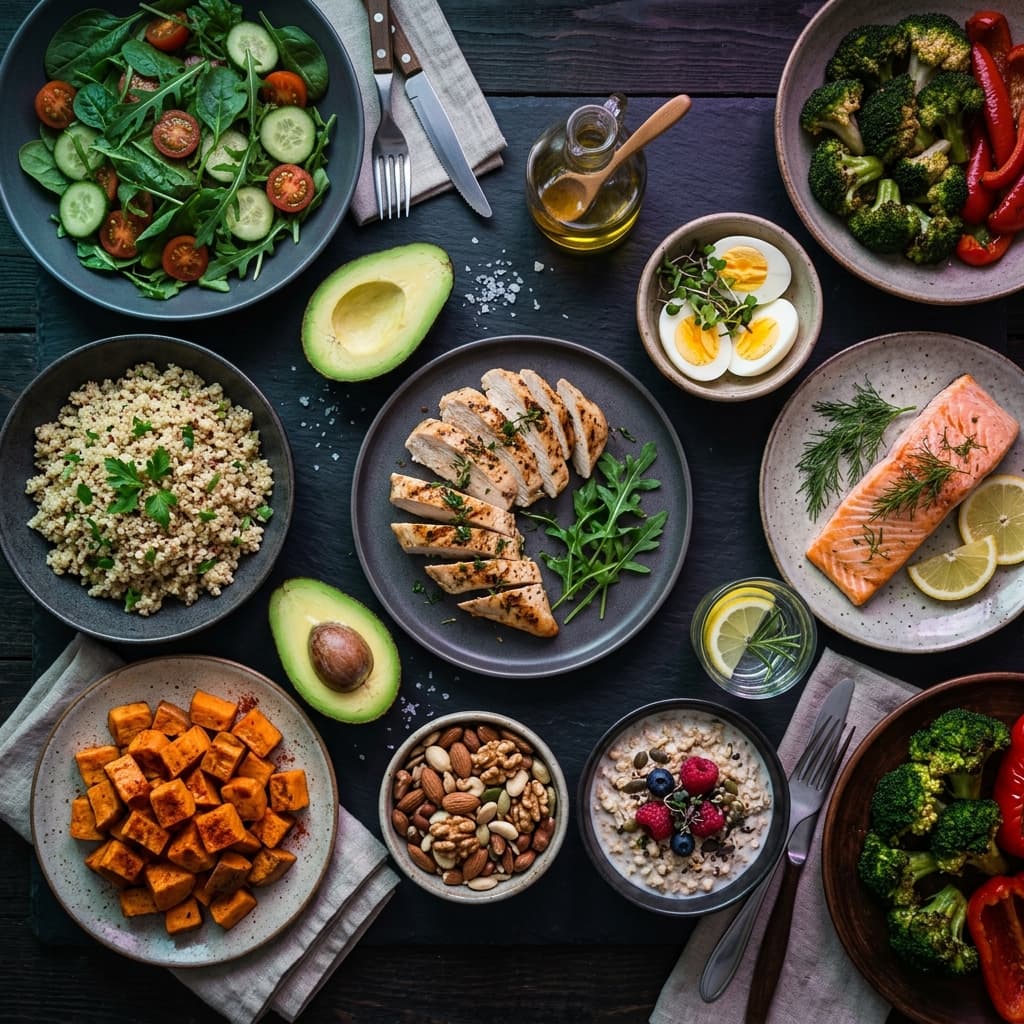
Animal proteins (chicken, eggs, fish, dairy) are "complete" — they contain all nine essential amino acids your body cannot synthesize. Plant proteins are often "incomplete," but strategic combinations (rice + beans, hummus + pita) fill every amino acid gap without requiring meat.
The Leucine Threshold
Muscle protein synthesis (MPS) is primarily triggered by the amino acid leucine. Research from the Journal of Nutrition shows you need ~2.5–3g of leucine per meal to maximally stimulate MPS — roughly the amount in 30–40g of high-quality protein. This is why spreading protein across 4–5 meals outperforms two large feasts for muscle building.
Why this matters: Randomized trials on protein intake during a caloric deficit (Longland et al., 2016; Helms et al., 2014) consistently show that higher protein intake preserves more lean mass than lower protein intake at the same calorie level — a simple, well-supported lever most people miss.
Top Protein Sources by Bioavailability
- ~110 DIAASWhey protein isolate— Fastest absorption — ideal post-workout
- ~113 DIAASEggs (whole)— The gold standard reference protein
- ~108 DIAASChicken breast— Lean and complete across all amino acids
- ~100 DIAASSalmon (wild)— Adds omega-3s alongside complete protein
- ~98 DIAASSoy protein isolate— Best plant-based complete protein
Carbohydrates: Your Primary Fuel
Carbohydrates have been vilified by keto culture, but glucose remains the brain's preferred fuel and the primary substrate for high-intensity exercise. The real issue is not carbohydrates themselves — it's the glycemic index, fiber content, and timing of carbohydrate intake that separates health outcomes.
Simple vs. Complex Carbohydrates
Simple carbohydrates (white sugar, fruit juice, refined grains) digest rapidly, causing sharp insulin spikes. Complex carbohydrates (oats, quinoa, sweet potato, lentils) digest slowly, providing sustained energy and feeding gut microbiome diversity. The glycemic load — not just glycemic index — determines the actual blood sugar impact per serving.
Carb Cycling and Performance
Strategic carb cycling — consuming more carbohydrates on high-intensity training days and fewer on rest days — allows you to maintain glycogen stores for performance while improving insulin sensitivity and fat oxidation on recovery days. Fitnivo's AI automatically adjusts daily carb targets based on your AI coaching workout schedule and biometric recovery data.
Fats: The Misunderstood Macro
Dietary fat is essential for testosterone production, vitamin absorption (A, D, E, K are all fat-soluble), cellular membrane integrity, and brain function (the brain is ~60% fat by dry weight). The decades-long "low-fat" movement contributed to the processed food era and arguably worsened metabolic health across populations.
The modern consensus: total fat isn't the enemy — trans fats and excessive saturated fat are. Monounsaturated fats (olive oil, avocados) and polyunsaturated fats (omega-3s from fatty fish and flaxseed) actively reduce systemic inflammation, support cardiovascular health, and improve insulin sensitivity.
Omega-3 to Omega-6 Ratio
Modern Western diets average a 15:1 omega-6 to omega-3 ratio. Research suggests optimal health falls between 4:1 and 2:1. This imbalance drives chronic low-grade inflammation — the root mechanism in metabolic syndrome, cardiovascular disease, and impaired recovery. Prioritizing fatty fish, walnuts, and flaxseed while reducing seed oils meaningfully improves this ratio.
Personalized Nutrition Science
The biggest revolution in nutrition science over the past decade is the unambiguous proof that there is no universal optimal diet. The PREDICT study (2019, Kings College London / Massachusetts General Hospital), the largest nutrition study ever conducted, showed that two people eating identical meals can have blood glucose responses varying by up to 10-fold. Insulin response, gut microbiome composition, sleep quality, and stress hormone levels all modulate how each person metabolizes every meal.
This is the science that makes AI-powered nutrition intelligence a genuine paradigm shift — not marketing hype. A system that continuously reads your biometric outputs and adjusts macro targets accordingly will outperform any static diet plan, regardless of how well-designed that plan is.
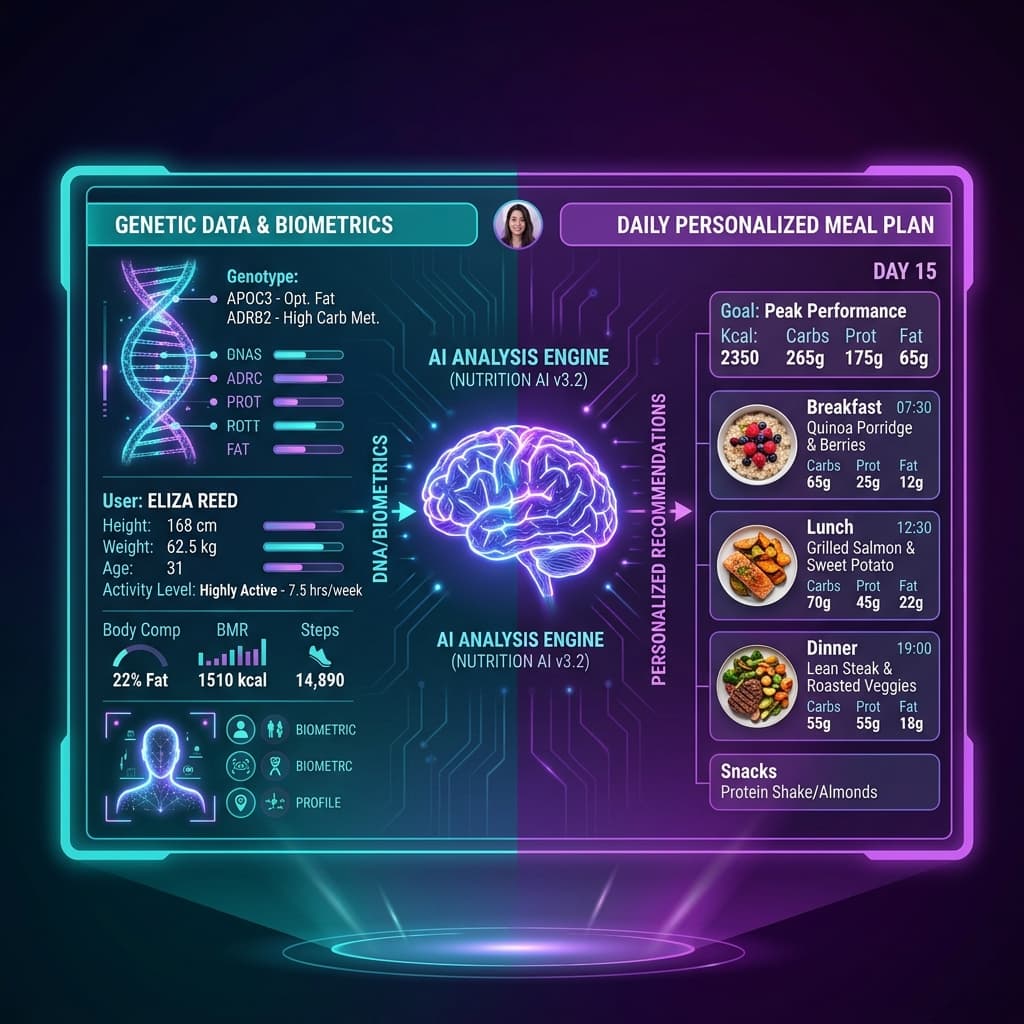
The Four Pillars of Personalized Nutrition
- 01
Metabolic Rate Calibration
Your basal metabolic rate (BMR) and total daily energy expenditure (TDEE) are individual constants that standard formulas like Mifflin-St Jeor underestimate by 15-20% in high-muscle-mass individuals. Continuous biometric monitoring refines these estimates weekly.
- 02
Gut Microbiome Profiling
Your unique gut bacterial ecosystem determines how efficiently you extract energy from food, produce short-chain fatty acids, and regulate appetite hormones (leptin, ghrelin). High-fiber diverse diets grow the microbiome diversity that correlates with leaner body composition.
- 03
Hormonal Context
Cortisol, insulin, testosterone, and thyroid hormones all shift macro partitioning. Under chronic stress (high cortisol), carbohydrates are preferentially stored as visceral fat. Adapting macro ratios to hormonal rhythms — not just workout schedules — produces dramatically better outcomes.
- 04
Training Phase Alignment
Nutrition requirements shift between hypertrophy phases (caloric surplus, high protein), cutting phases (caloric deficit, even higher protein to preserve muscle), and maintenance. AI systems that dynamically adjust to phase transitions prevent the stagnation that kills most manual diet attempts.
Nutrient Timing & Performance
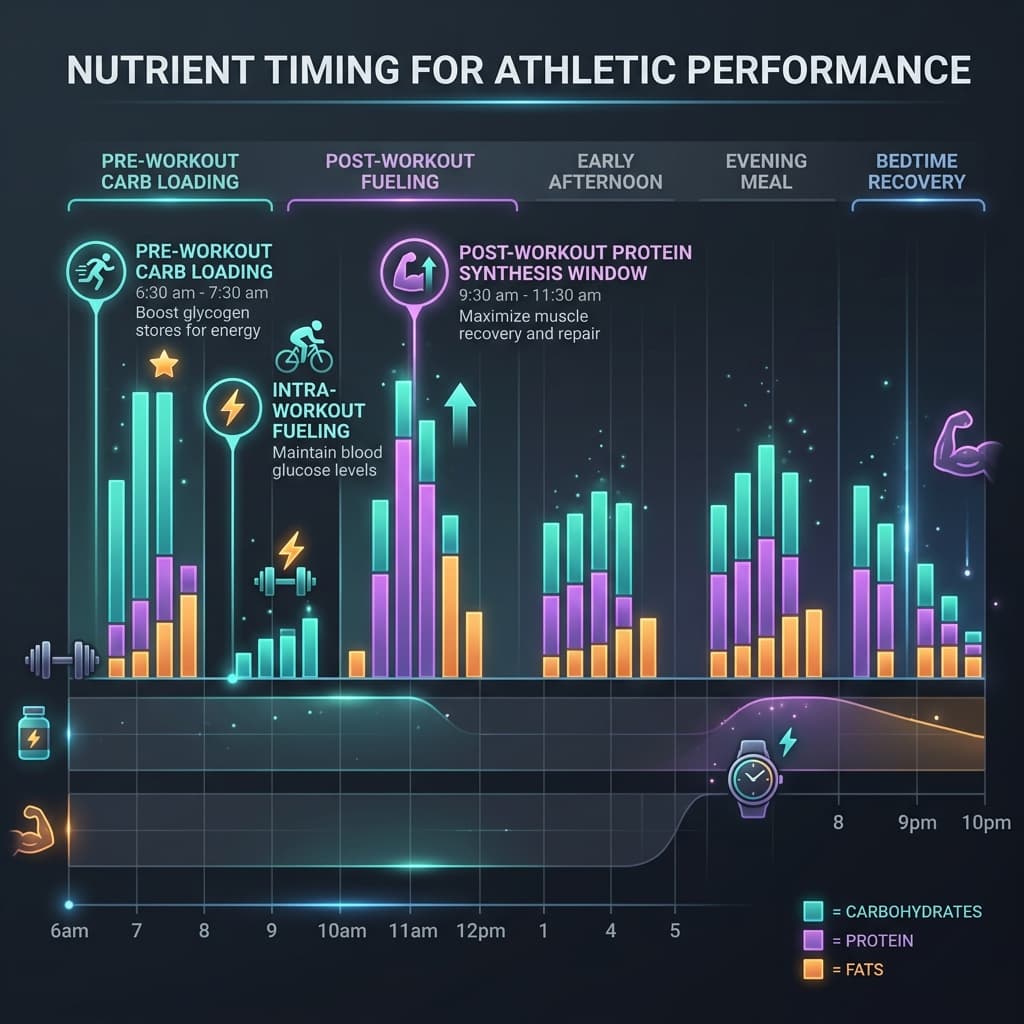
When you eat is nearly as important as what you eat for athletic performance and body composition. The "anabolic window" — long believed to be a strict 30-minute post-workout protein deadline — is more flexible than originally theorized, spanning 2–3 hours. But pre-workout carbohydrate loading and strategic post-workout nutrition remain evidence-backed performance levers.
Pre-Workout
2–3 hrs before
- ▸1–4g/kg carbohydrates
- ▸Moderate protein (~20g)
- ▸Minimize dietary fat
- ▸Hydrate: 500ml water
Intra-Workout
During training
- ▸Fast carbs (>60 min sessions)
- ▸6–8% carb solution
- ▸Electrolytes: Na, K, Mg
- ▸BCAAs optional
Post-Workout
Within 2 hrs
- ▸25–40g fast protein
- ▸Leucine-rich source
- ▸1–1.5g/kg carbohydrates
- ▸Anti-inflammatory foods
AI-Driven Nutrition Personalization
Static diet plans fail because bodies are dynamic systems. Fitnivo's nutrition AI solves this by treating nutrition as a control loop: ingest biometric input → analyze patterns → adjust macro and micronutrient targets → reassess outcomes → repeat. This closed-loop approach outperforms any static meal plan by definition because it corrects its own errors.
The system integrates data from workout completion, logged meals, and sleep/activity signals (when available from a wearable) to build a picture of your individual nutritional response — one that improves with every data point. The core value is honest: a plan that adjusts to what you actually do beats a static plan you eventually stop following.
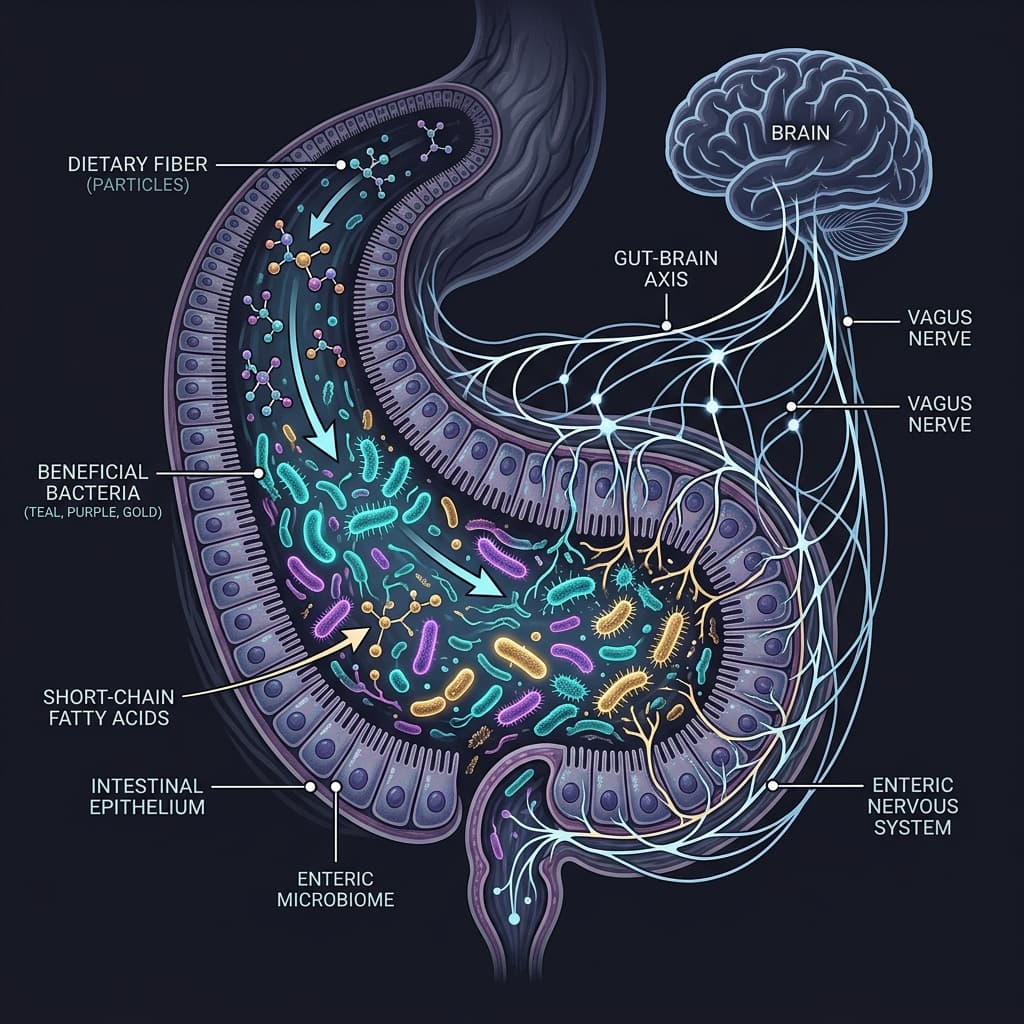
How Does AI Personalize Nutrition?
AI nutrition systems analyze biometric inputs (HRV, sleep stages, activity data), food logs, and body composition trends to continuously recalibrate macro targets, meal timing windows, and micronutrient priorities. Unlike static plans, AI models update recommendations daily as your physiology and lifestyle context shift, creating a true feedback loop between what you eat and how your body responds.
Explore how mindfulness and stress management further modulate nutritional outcomes through cortisol regulation — one of the most underappreciated variables in body composition science.
🎯 Key Takeaways
- 1
Macronutrient quality and timing matter more than raw calorie counting — focus on whole-food sources that provide density of both macros and micros.
- 2
Protein needs for active individuals are 2x the standard RDA recommendation (1.6–2.4g/kg vs 0.8g/kg) — spread evenly across 4–5 meals to maximize muscle protein synthesis.
- 3
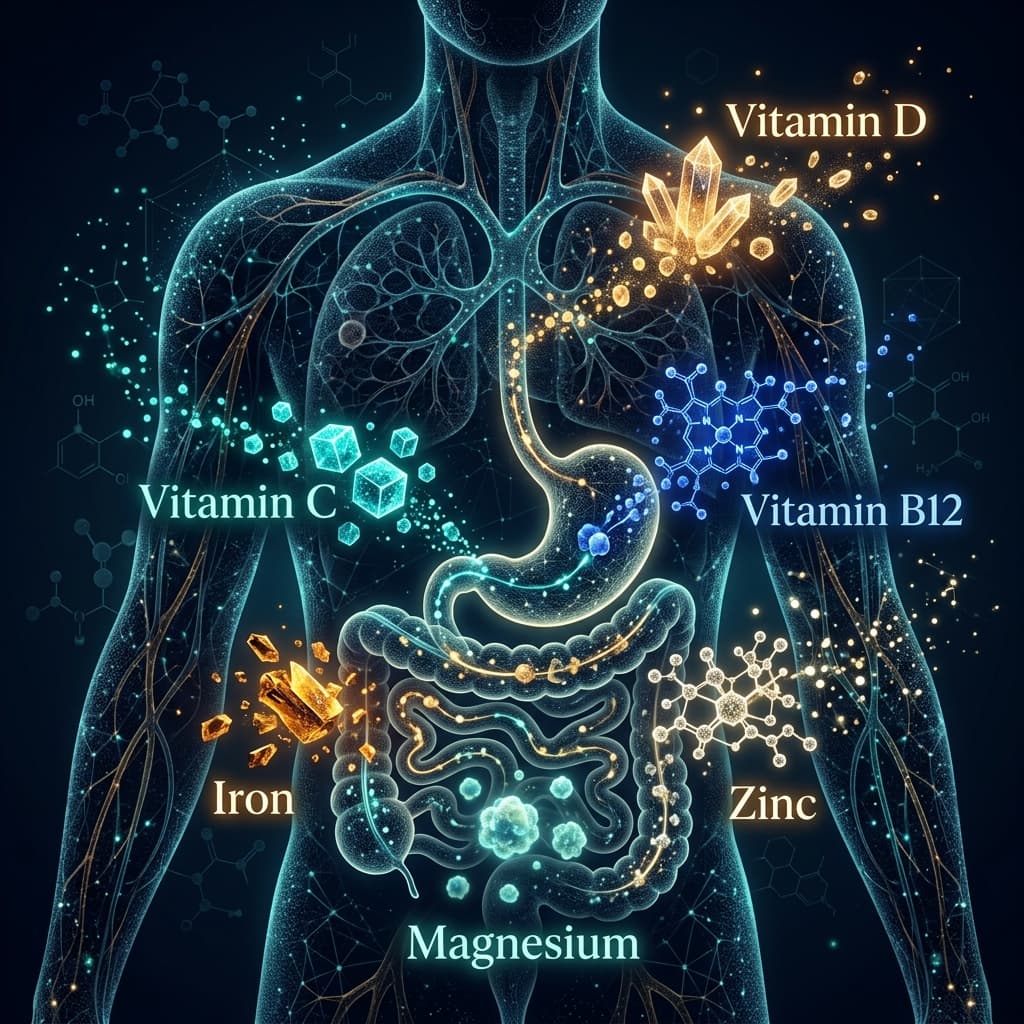
Over 90% of adults are deficient in at least one key micronutrient; prioritize vitamin D, magnesium, and zinc through food-first strategies before supplementing.
- 4
Individual variation in dietary response (proven by PREDICT study) means no single diet plan works optimally for everyone — personalization is not a luxury, it is a biological necessity.
- 5
AI-driven nutrition systems create a feedback loop between biometric outputs and dietary inputs, outperforming any static plan by correcting its own errors continuously.
Ready to Personalize Your Nutrition?
Stop guessing your macros. Fitnivo's AI reads your biometrics, adapts to your physiology, and delivers a nutrition plan that's as unique as your fingerprint.

Fitnivo Editorial Team
Research & analysis at Fitnivo
The Fitnivo Editorial Team publishes practical, source-cited guides on AI fitness and nutrition. This article is general information and does not substitute for individual medical or dietetic advice — if you have a clinical condition, work with a qualified professional.
Related Articles
 Science
The Science of Biometric Optimization
How wearables and AI combine to optimize your body's performance metrics.
8 min read Recovery
Recovery Optimization: Sleep, Stress & Adaptation
Science-backed strategies to maximize recovery and supercharge your adaptation.
10 min read Mindfulness
Mindfulness and Athletic Performance
The neuroscience of how mindfulness training enhances athletic output.
9 min read