

In the highly competitive world of sports, physical conditioning alone is no longer the sole differentiator between good athletes and elite champions. When physical capabilities peak, the mind becomes the ultimate performance multiplier. Mindfulness and athletic performance are deeply interconnected, forming a mind-body connection that dictates how athletes respond to pressure, recover from setbacks, and execute complex motor skills under high-stress conditions.
For decades, sports psychology relied heavily on traditional cognitive-behavioral techniques that encouraged athletes to block out negative thoughts or forcefully hype themselves up. However, suppressing anxiety often creates more internal friction. Today, elite athletes, from Olympic swimmers to professional basketball players, are turning to mindfulness-based interventions. Rather than fighting their internal state, athletes use mindfulness to observe their nervous system, regulate their heart rates, and bring their complete attention to the present moment. This shift from "fighting the mind" to "mastering the mind" represents the next evolution in high-performance athletic training.
Whether you are stepping up to the free-throw line, preparing for a heavy deadlift, or recovering from a grueling marathon, integrating mindfulness into your sports training can unlock a level of focus and emotional control that purely physical training simply cannot provide.
The Science Behind the Mind-Body Connection in Sports
To understand how mindfulness improves athletic performance, we must look at the physiological changes it creates within the human body. The connection between the mind and the body is not just a philosophical concept; it is a measurable, neurological loop driven by the autonomic nervous system.
When an athlete faces a high-stakes moment—such as a penalty kick or a heavy lift—the brain's amygdala often perceives the pressure as a physical threat. This triggers the sympathetic nervous system, commonly known as the "fight or flight" response. The body is instantly flooded with adrenaline and cortisol. While a small amount of adrenaline can boost explosive power, an overactive sympathetic response causes severe performance degradation. Heart rates spike uncontrollably, breathing becomes shallow, and peripheral vision narrows. Most importantly, fine motor skills and decision-making abilities are severely impaired. This is what athletes experience when they "choke" under pressure.
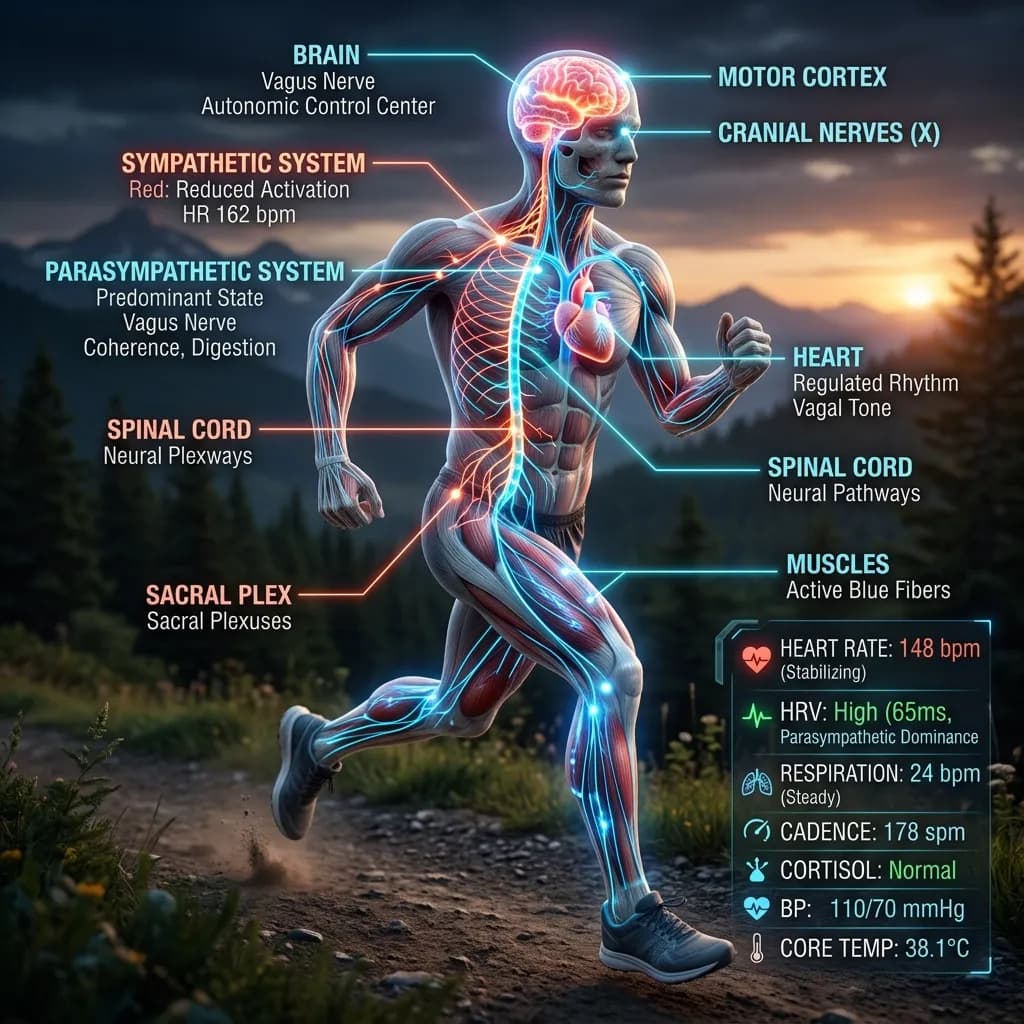
Mindfulness practices, such as controlled breathing and interoceptive awareness (the ability to feel and understand your body's internal signals), directly counteract this stress response. By focusing on the present moment, athletes activate the parasympathetic nervous system, also known as the "rest and digest" state. This activation downregulates the amygdala, signaling to the brain that the body is safe.
Recent studies published in journals like Psychology of Sport and Exercise and data from 2026 sports science research indicate that regular mindfulness training significantly reduces baseline cortisol levels in athletes. By lowering these stress hormones, athletes can maintain a balanced heart rate variability (HRV) and keep their prefrontal cortex—the logical, strategy-driven part of the brain—fully engaged during competition. This biological mechanism is the foundation of the mind-body connection in sports, proving that a calm mind directly results in a more capable, responsive physical body.
4 Proven Benefits of Mindfulness for Athletes
The integration of mindfulness into a training block yields concrete, measurable benefits that translate directly to the scoreboard, the stopwatch, or the lifting platform. Here are the four most significant ways mindfulness enhances sports performance.
01. Reduced Competition Anxiety
Pre-game anxiety is one of the most common hurdles athletes face. Cognitive anxiety manifests as racing thoughts, self-doubt, and the fear of failure, while somatic anxiety presents as physical symptoms like nausea, muscle tension, and shaky hands. Mindfulness for athletes specifically targets both forms of anxiety by teaching non-judgmental awareness.
Instead of obsessing over a past mistake or worrying about the final score, a mindful athlete learns to anchor their attention to the current sensory experience—the feel of the turf, the grip on the barbell, or the rhythm of their breath. By staying grounded in the present moment, the athlete prevents their mind from spiraling into worst-case scenarios, effectively neutralizing competition anxiety before it can sabotage their physical execution.
02. Enhanced Emotional Resilience
Sports are inherently unpredictable. A bad call by a referee, a sudden change in weather, or an unexpected strategy from an opponent can easily derail an athlete's focus. Emotional resilience is the ability to absorb these shocks and immediately recalibrate without "tilting" or losing emotional control.
Mindfulness builds emotional resilience through the practice of acceptance. When a mindful athlete misses a crucial shot, they acknowledge the frustration without attaching their identity or confidence to the failure. They observe the negative emotion, let it pass, and immediately refocus on the next play. This rapid emotional reset prevents a single mistake from snowballing into a streak of poor performance, allowing the athlete to maintain a consistent, high-level output regardless of external circumstances.
03. Laser-Focused Attention (The Flow State)
The ultimate goal of any athlete is to achieve the "flow state"—a psychological state of complete immersion, where time seems to slow down, and complex movements happen autonomously without conscious thought. Achieving flow requires an incredibly high degree of focused attention and a perfect balance between the challenge at hand and the athlete's skill level.
Mindfulness is the gateway to the flow state. By training the brain to block out task-irrelevant distractions, such as crowd noise, opponent trash talk, or internal doubts, mindfulness allows the athlete to dedicate 100% of their cognitive bandwidth to the physical task. Research consistently shows a strong correlation between high mindfulness traits and the frequency of entering a flow state, making it a critical tool for athletes seeking peak performance.
04. Accelerated Physical Recovery
Warm, tissue-repairing recovery blocks only occur when the body is in a parasympathetic state. Mindfulness accelerates physical recovery by helping athletes transition out of the high-stress, adrenaline-fueled state of competition and into a restful state. Techniques like mindful body scanning and deep breathing improve sleep latency (how fast an athlete falls asleep) and sleep quality. Better sleep leads to increased human growth hormone (HGH) production and faster clearance of metabolic waste from the muscles, ensuring the athlete is physically prepared for their next rigorous training session.
Practical Mindfulness Techniques You Can Use Today
Understanding the science is only half the equation; the real value comes from consistent application. You do not need to sit on a cushion for hours to be a mindful athlete. Here are three highly effective, actionable mindfulness exercises designed specifically for sports performance.
The Pre-Game Body Scan
The body scan is an interoceptive awareness exercise used to identify and release subconscious muscle tension before a competition. When athletes are nervous, they often hold tension in their shoulders, jaw, or hip flexors, which restricts their range of motion and drains energy.
How to do it: Find a quiet place in the locker room or on the sidelines. Close your eyes and bring your complete attention to your toes. Slowly move your focus upward—through your calves, knees, thighs, and hips. As you mentally scan each muscle group, consciously release any tightness you feel. Continue scanning up through your core, chest, arms, neck, and face. This 3-to-5-minute practice physically relaxes the body while mentally grounding you in the present moment, ensuring you step onto the field loose, agile, and acutely aware of your physical state.
Box Breathing for High-Pressure Moments
Box breathing, or tactical breathing, is a technique utilized by Navy SEALs and elite athletes to instantly downregulate the sympathetic nervous system and lower the heart rate during moments of extreme pressure.
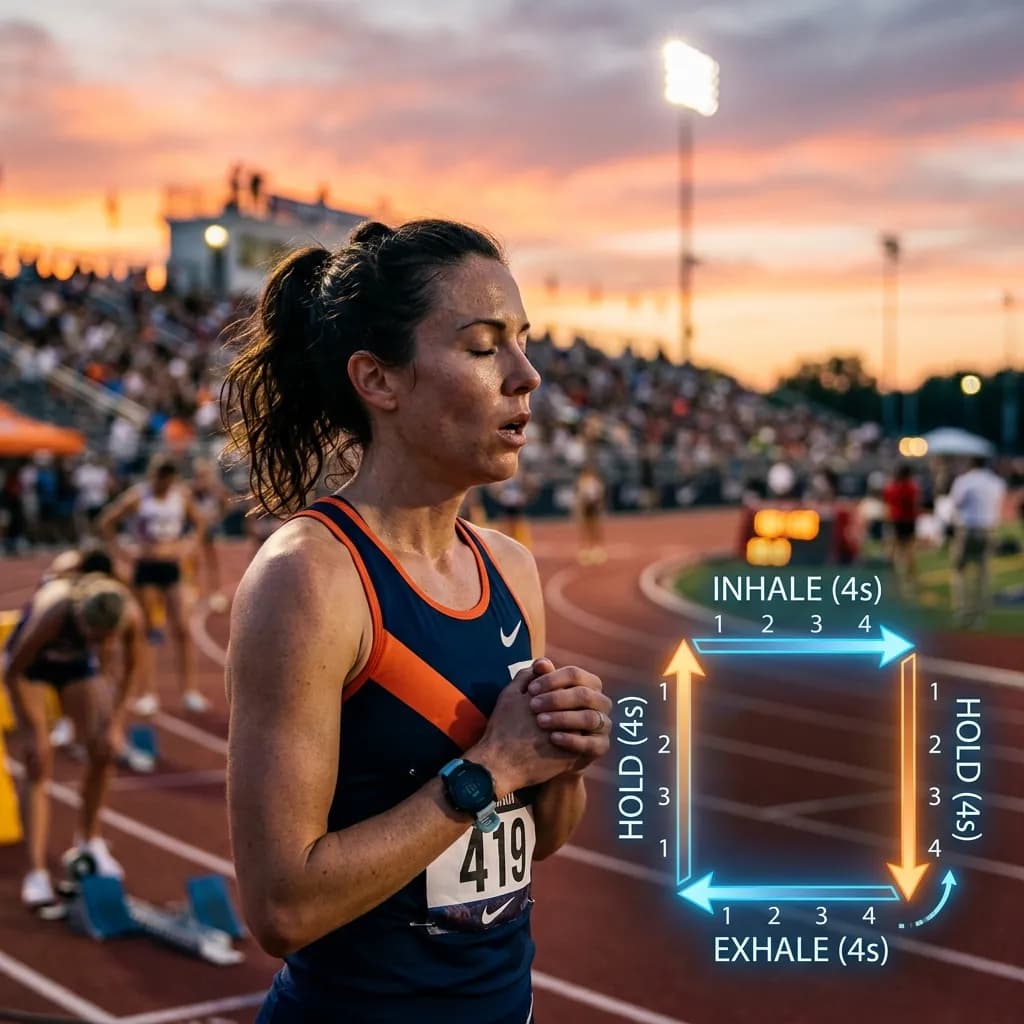
How to do it: Visualize a square box.
1. Inhale deeply through your nose for a count of 4 seconds (visualize traveling up the left side of the box).
2. Hold your breath for a count of 4 seconds (traveling across the top).
3. Exhale slowly and completely through your mouth for a count of 4 seconds (traveling down the right side).
4. Hold your breath empty for a count of 4 seconds (traveling across the bottom).
Repeat this cycle four to five times. Box breathing immediately forces the body out of "fight or flight" mode, restoring your fine motor control and tactical decision-making right before a critical play.
Tactical Visualization
Visualization, or mental rehearsal, is a cognitive mindfulness technique where an athlete vividly imagines successfully executing a movement before physically performing it. Because the brain cannot always distinguish between a deeply imagined action and a physical one, visualization literally primes the neural pathways required for the movement.
How to do it: Close your eyes and visualize a specific, upcoming scenario, such as serving a tennis ball or executing a heavy squat. Engage all of your senses. Feel the texture of the equipment, hear the sounds of the environment, and vividly see yourself completing the movement with perfect form. By mindfully rehearsing success, you build deep neurological confidence, reducing hesitation when it is time to perform the action in reality.
How to Build a Daily Sports Mindfulness Routine
To see genuine improvements in your athletic performance, mindfulness must become a consistent part of your daily routine, treated with the same dedication as your physical workouts or your nutrition planning.
Before Training (The Primer): Spend 5 minutes before your warmup engaging in tactical visualization. See the workout ahead of you. Set a clear, mindful intention for the session—whether it is maintaining perfect form, controlling your breathing, or pushing through fatigue with a positive attitude.
During Training (The Anchor): Use physical triggers as mindfulness anchors. For example, every time you grab your water bottle, use that as a cue to take one deep, mindful breath and reset your focus. If you find your mind wandering to work stress or life issues, gently acknowledge the distraction and bring your attention back to the physical sensation of the exercise.
Offloading your cognitive burden also helps keep you present. By utilizing the Fitnivo app, you can seamlessly track your progressive overload in the Workout tab and sync your macro targets in the Meal tab. Knowing that your data and nutrition are perfectly calculated by your AI coach frees up your mental bandwidth, allowing you to stay 100% focused on the physical execution of your training.
After Training (The Downshift): Immediately after your cool-down, spend 3 to 5 minutes performing a body scan or box breathing. This signals to your central nervous system that the stress of the workout is over, kickstarting the parasympathetic recovery process.
Frequently Asked Questions
Does mindfulness actually improve sports performance?
Yes. By reducing cortisol levels and downregulating the "fight or flight" response, mindfulness improves emotional control, focus, and fine motor skills. It allows athletes to maintain a clear, strategic mindset under extreme pressure, directly leading to improved execution and better results.
How long should an athlete meditate?
Consistency is far more important than duration. Research indicates that just 10 to 15 minutes of daily mindfulness practice is enough to yield significant improvements in attentional control and stress reduction. Short, frequent sessions are ideal for busy athletes.
Can mindfulness prevent sports injuries?
Yes, indirectly. Mindfulness significantly enhances interoceptive awareness—the ability to accurately feel and interpret your body's internal signals. Mindful athletes are much more attuned to early signs of muscle fatigue, joint strain, or poor biomechanics. This heightened awareness allows them to adjust their form or stop a set before a catastrophic physical injury occurs, making it a vital component of long-term athletic health.
Is mindfulness only for elite or professional athletes?
Not at all. While professionals heavily utilize these techniques, novice and amateur athletes often see the most dramatic improvements. Beginners typically struggle more with performance anxiety and emotional regulation, meaning that integrating simple breathing and focus techniques can rapidly elevate their overall sports experience and physical output.